



.svg)


Port Gamble Fish Hatchery Roof Install, WA
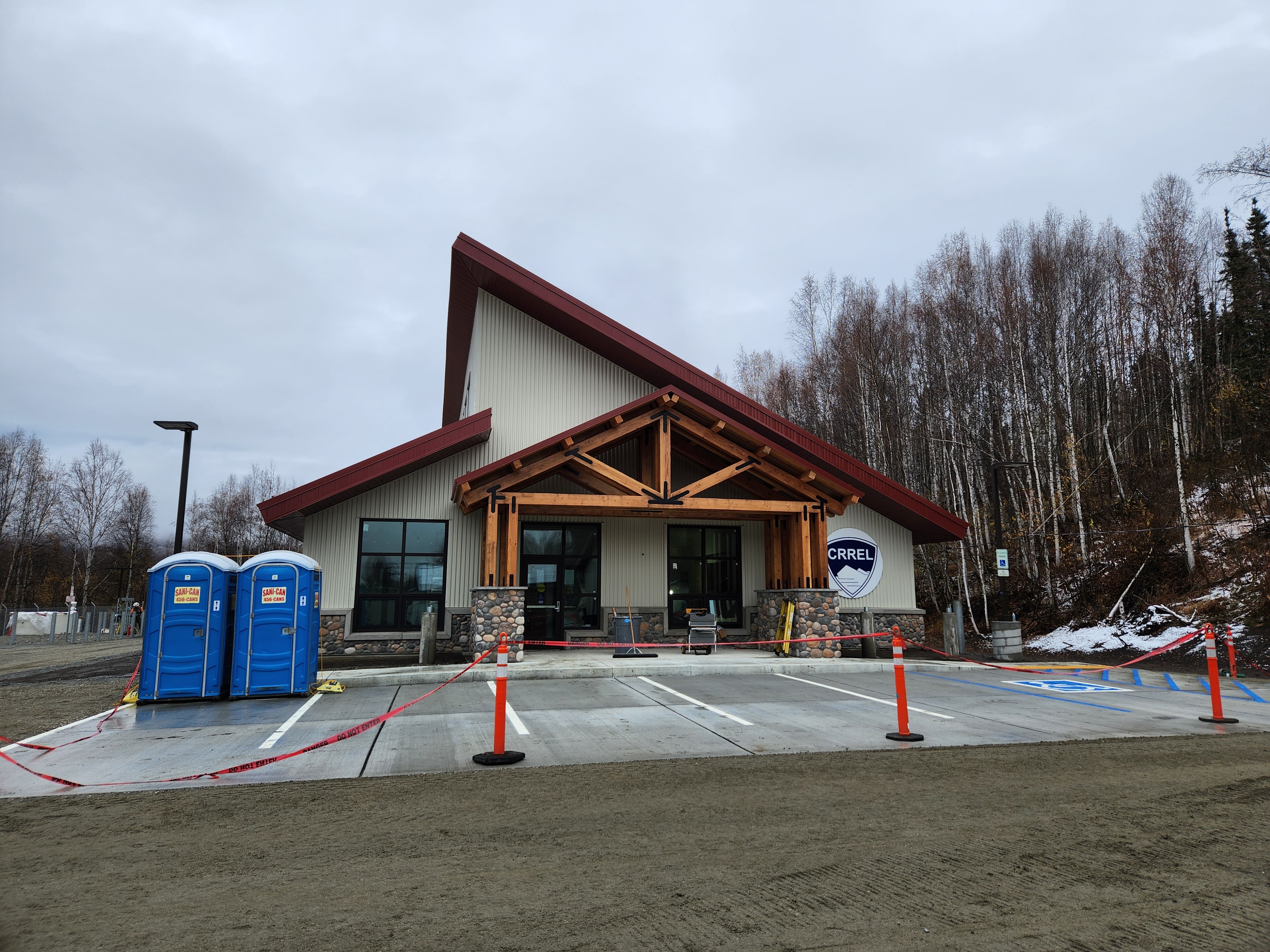
Cold-Climate Research Facility Using SIP Construction | ERDC
Alaska
Project Type Commercial | Government
Year Completed 2025
SIPS Used 10-¼" EPS walls, 12-¼" EPS roof
Architect US Army Corps of Engineers, Alaska District
Contractor Ghemm Company LLC & Paug Vik
Project Overview
ERDC Permafrost Tunnel Operations Facility
High-Performance SIP Construction for Extreme Cold Research
Located in Fox, Alaska, the ERDC Permafrost Tunnel Operations Facility is a high-performance military research facility supporting nationally significant studies of permafrost behavior, climate change, and infrastructure stability. The 4,300-square-foot building sits adjacent to the historic Permafrost Tunnel Research Complex and provides essential space for laboratories, cold storage, maintenance operations, offices, and visitor briefing areas.
Designed for year-round operation in a subarctic and Arctic environment, the facility enables advanced scientific research focused on understanding how warming temperatures impact frozen ground and the long-term performance of infrastructure in permafrost regions.
Design and Sustainability
The facility was designed to maintain highly controlled interior environments while withstanding prolonged exposure to extreme cold, freeze–thaw cycles, and shifting permafrost conditions. Interior spaces include laboratory areas with cold storage and a three-dimensional permafrost test bed, as well as garage and maintenance space, offices, meeting rooms, and educational briefing areas.
Energy efficiency, durability, and moisture control were critical design priorities. As a government research building in Alaska, the structure required a building envelope capable of delivering consistent thermal performance and minimizing energy demand in a climate dominated by heating loads.
Why SIPs?
Structural Insulated Panels (SIPs) were selected to deliver a high-performance, climate-resilient building envelope capable of meeting the demanding requirements of Arctic construction. As a military research facility located in a permafrost region, the project required SIP construction that could provide predictable thermal control, low air leakage, and long-term durability.
SIPs offered an integrated solution—combining structure, continuous insulation, and air sealing into a single system—reducing construction risk while improving envelope reliability. Their use supported energy-efficient building design while simplifying installation in a remote location with a short construction season.
Benefits of SIPs
The use of SIPs provided significant construction and performance benefits:
-
Exceptional Thermal Performance:
Thick EPS SIP wall and roof panels deliver continuous insulation, reduce thermal bridging, and help maintain stable interior temperatures in sustained subzero conditions. -
Superior Airtightness:
SIP construction minimizes air leakage, improving energy efficiency and supporting the precise environmental control required for laboratory and cold-storage spaces. -
Construction Efficiency:
Factory-manufactured SIP panels reduced onsite labor, accelerated dry-in, and improved schedule reliability—critical for cold-climate construction in Alaska. -
Durability and Moisture Control:
The continuous SIP envelope supports effective moisture management and long-term durability, protecting sensitive research environments adjacent to the permafrost tunnel.
Construction and Innovation
Large-format SIP assemblies reduced the number of seams and potential weak points in the building envelope. The structural efficiency of SIPs provided predictable load paths while minimizing weight—an important consideration for construction over permafrost-affected soils.
SIP construction also enabled clean transitions between spaces with varying temperature requirements, supporting the facility’s specialized research functions while maintaining envelope continuity.
Challenges and Solutions
Building in Interior Alaska presents unique challenges, including extreme cold, limited construction windows, and remote logistics. SIP construction addressed these challenges by arriving prefabricated and ready for installation, reducing weather exposure and improving construction efficiency.
By delivering a high-performance envelope in fewer steps, SIPs helped overcome environmental constraints while ensuring long-term performance in one of the most demanding climates in North America.
Key Features
-
4,300-square-foot research and operations facility
-
Military research facility supporting permafrost and climate studies
-
Laboratory with cold storage and permafrost test bed
-
Garage, maintenance, office, and visitor briefing spaces
-
Energy-efficient SIP building in Alaska
-
Thick EPS SIP wall and roof panels
-
Designed for extreme cold and Arctic construction conditions
Ready to Build Beyond Conventional Framing?
Premier SIPS deliver a high-performance building envelope that outperforms traditional framing in efficiency, strength, and long-term durability. If you're evaluating SIPs, planning an upcoming project, or ready for pricing, now is the time to talk with our team about the right next step.
