



.svg)


Weather Delays in Construction and How to Shrink the Exposure Window
Every week a framed structure sits exposed to weather is real financial risk. See what that risk actually costs and how to..
The U.S. construction industry is facing one of the most significant workforce challenges in decades. According to recent industry data, the sector needs hundreds of thousands of new workers just to keep pace with demand — with forecasts calling for roughly 349,000 net new workers in 2026 alone to maintain supply-demand balance.
Even with slowdowns in some segments, labor demand remains acute: surveys show 92% of firms report difficulty hiring skilled workers, and about one in three construction projects are delayed because crews can’t be found.
Q: Why is labor shortage such a big deal right now?
• Retirement of experienced tradespeople, fewer young people entering the field, and competing demand from booming sectors like data center construction are all squeezing the workforce.
Q: How does this impact my project costs and schedules?
• When crews are hard to find, wages rise — and slower schedules mean higher carrying costs, prolonged financing interest, and frustrated owners.
Q: Is there a way to build faster without more hands on deck?
• Yes — and that’s where structural insulated panels (SIPs) can transform your build process.
Traditional stick framing requires sequential tasks by multiple trades: framing crews, insulation installers, then sheathing crews. That means more labor hours, more subcontractors, and more scheduling complexity.
SIPs simplify this dramatically:
This doesn’t just lower labor hours — it reduces the number of specialized skilled trades you need on site, which is critical when qualified crews are hard to recruit.
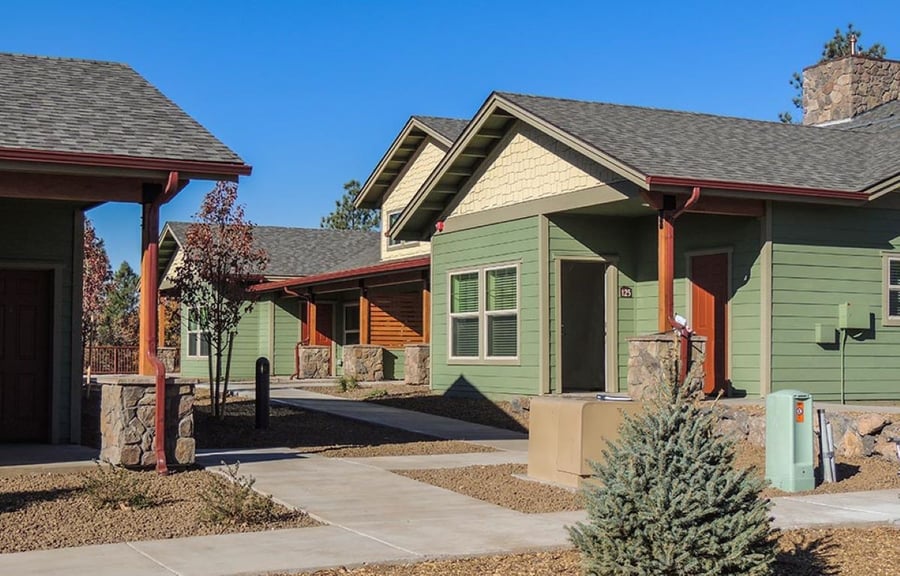 Affordable senior housing in Flagstaff, AZ consisting of 60 units uses Structural Insulated Panels (SIPs). The SIPs were installed in just a couple days.
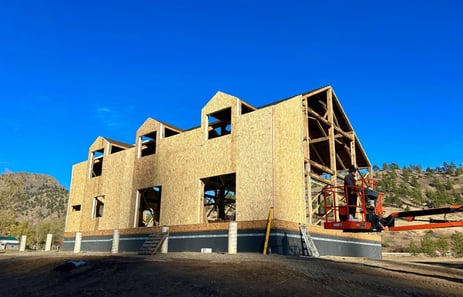 While workforce shortages top the list, other industry headwinds matter too — and SIPs help here as well:
Even as wage pressures persist, SIPs can help control costs by reducing waste, minimizing rework, and shrinking the overall construction timeline.
With fewer schedule risks due to weather or multi-trade coordination, SIP builds are often more predictable — and predictable schedules lower financing and holding costs.
Builders and owners are increasingly focused on energy performance. SIPs deliver a tight building envelope with excellent insulation — helping meet code targets and homeowner expectations alike.
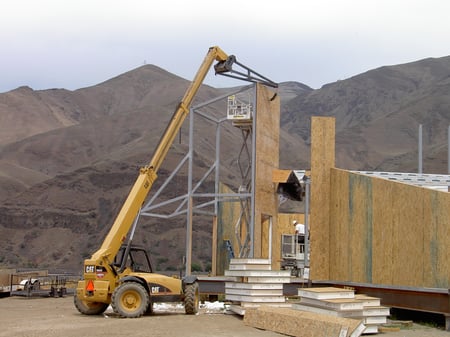 ✔ Less dependence on scarce skilled labor
✔ Faster construction timelines
✔ Reduced framing and installation waste
✔ Better energy performance and client satisfaction
✔ Clear, predictable builds even when crews are thin
When labor markets tighten — as they continue to in years to come— the ability to build efficiently without sacrificing quality becomes a competitive advantage.
If labor shortages are slowing you down or squeezing your margins, it’s time to explore how Premier SIPS can change your project outcomes with fewer crews and faster schedules.
👉 See how SIPS stack up against stick framing and get a custom panel estimate for your next build.


Premier SIPS deliver a high-performance building envelope that outperforms traditional framing in efficiency, strength, and long-term durability. If you're evaluating SIPs, planning an upcoming project, or ready for pricing, now is the time to talk with our team about the right next step.
