



.svg)


Weather Delays in Construction and How to Shrink the Exposure Window
Every week a framed structure sits exposed to weather is real financial risk. See what that risk actually costs and how to..

Every construction project relies on people. And people bring different levels of experience, training, and familiarity with a given system. Crews change. Schedules compress. Labor availability fluctuates. These conditions aren’t unique to any one project or market. They are part of modern construction.
The challenge isn’t eliminating labor variability. It’s designing buildings that perform consistently despite it.
As outlined in our 2026 Construction Outlook, ongoing labor constraints and workforce variability are expected to continue reshaping how projects are planned, detailed, and executed. As these conditions persist, design strategies that reduce jobsite complexity and reliance on field interpretation become increasingly important.
That’s where better design, better systems, and upstream decisions play a critical role.
Learn more about how consistent performance starts
Labor conditions vary from jobsite to jobsite and even from week to week on the same project. Installers may be highly experienced or relatively new. Subcontractors rotate. Schedules compress. None of this reflects a lack of professionalism. It reflects the reality of modern construction.
At the same time, buildings are still expected to meet performance expectations for energy efficiency, durability, comfort, and code compliance. Those expectations don’t change based on who is installing the work.
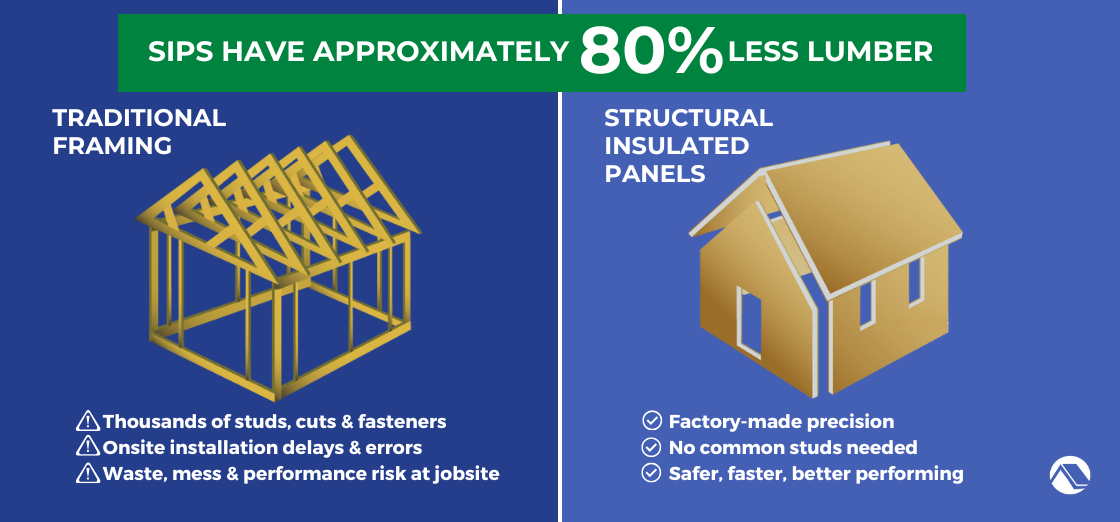
Traditional construction assemblies place much of that performance risk directly on the jobsite. Thousands of measurements. Thousands of cuts. Thousands of fasteners. Multiple layers installed by different trades, often days or weeks apart.
Each step introduces opportunity for small variations. A wall slightly out of square. A roofline that doesn’t align with the drawings. Field adjustments to soffits, eaves, overhangs, or complex roof geometries. Individually, these deviations may seem minor. Collectively, they can compromise performance, quality, and design intent.
This is especially frustrating for designers and builders who take pride in their work. There’s nothing worse than seeing a carefully designed roofline, fascia detail, or architectural feature lose its intent because field conditions forced improvisation.
The more decisions that must be made in the field, the more variability is introduced into the final outcome. That’s why third-party research continues to show that systems-based approaches help reduce reliance on field variability while delivering more consistent results.
Explore Supporting Research
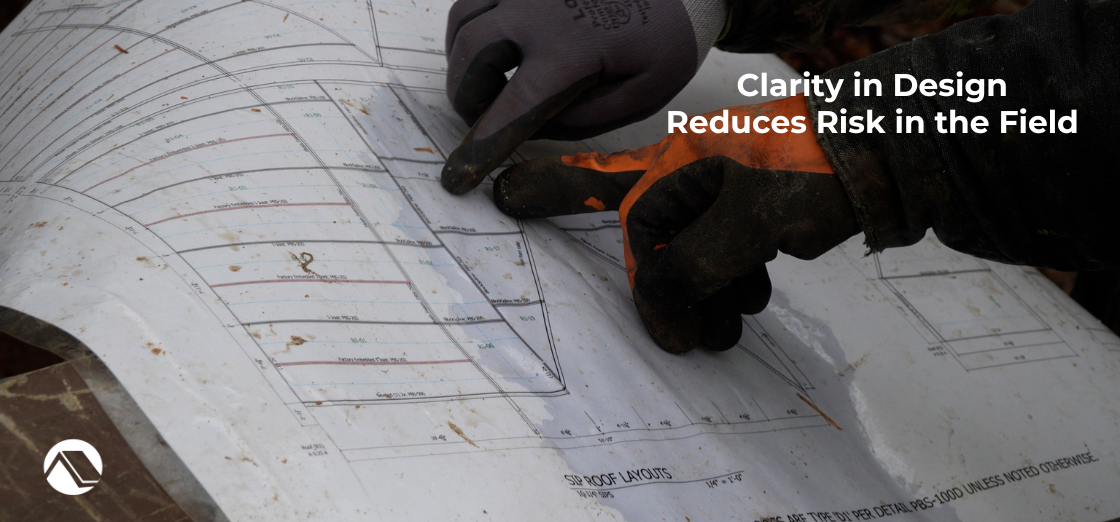
Consistent performance doesn’t start during installation. It starts during design.
Early decisions about how the building envelope is assembled, how tolerances are handled, and how systems are coordinated directly influence what happens in the field. Clear design intent, coordinated details, and defined assemblies reduce the burden on installers and minimize guesswork.
Shop drawings, pre-planned connections, and clearly communicated sequencing remove ambiguity. They shift critical decisions out of the field and into a controlled, intentional process.
Consistency isn’t enforced later. It’s designed in from the start.
Explore Pre-Planning in Construction
This is where systems-based construction approaches, such as Structural Insulated Panels (SIPs), naturally support consistency.
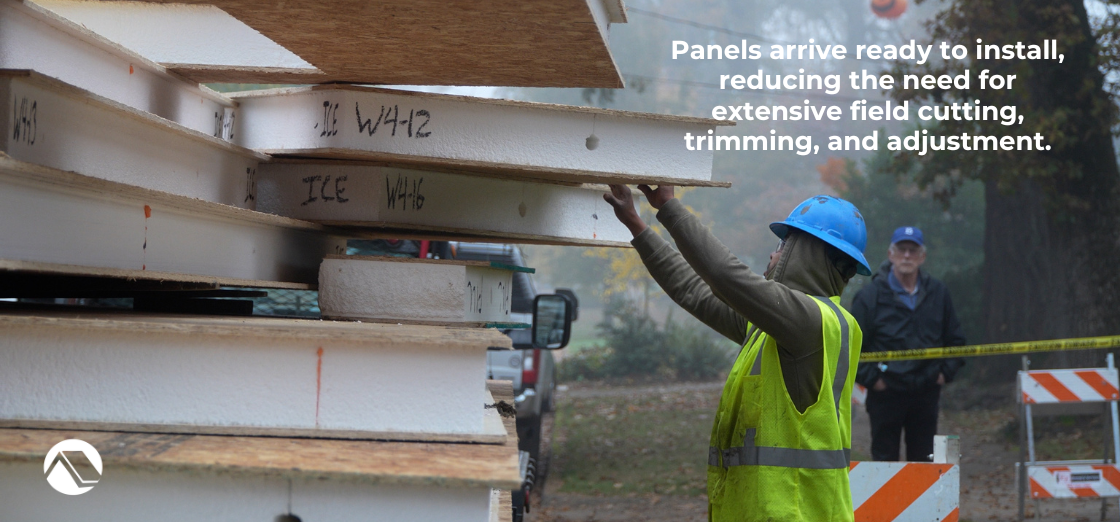
Rather than assembling buildings piece by piece in the field, SIPs rely on factory fabrication where dimensions, tolerances, and connections are established under controlled conditions. Panels arrive ready to install, reducing the need for extensive field cutting, trimming, and adjustment.
A SIP building envelope helps by:
This doesn’t remove the need for skilled labor. It supports it. A SIPs system does more of the work upfront, allowing installers to focus on execution rather than problem-solving around inconsistencies.
SIPs are not a replacement for craftsmanship. They are a way to protect building performance when experience varies.
Reducing variability in the field starts with smarter system choices
Designing for consistency has long-term benefits that extend well beyond installation.
Projects designed around systems-based envelopes typically see:
These outcomes aren’t accidental. They’re the result of reducing variability and managing complexity upstream.
 Labor variability isn’t going away. Schedules will continue to tighten. Projects will continue to demand higher performance.
Building better doesn’t mean fighting these realities. It means designing for them.
Systems-based approaches help teams deliver consistent results in an inconsistent environment by shifting risk out of the field and into design, planning, and fabrication. That’s how better buildings are delivered reliably, not just ideally.
Why does labor variability affect building performance?
Because traditional construction relies heavily on field execution, interpretation, and sequencing. Variability in experience can lead to inconsistencies that affect airtightness, alignment, and durability.
How do systems-based building envelopes reduce jobsite risk?
They reduce the number of decisions, cuts, and interfaces that must be handled in the field, making performance more repeatable and predictable.
Are SIPs suitable for projects with less experienced crews?
Yes. SIPs simplify installation by relying on factory precision and clearly defined assemblies, which helps support consistent results across a range of experience levels.
Do SIPs eliminate the need for skilled labor?
No. SIPs support skilled labor by reducing complexity and protecting performance, not replacing craftsmanship.
How early should envelope systems be considered in a project?
As early as possible. Envelope performance, tolerances, and sequencing decisions made during design have the greatest impact on jobsite outcomes.
Can systems-based construction help reduce callbacks?
Yes. Fewer interfaces, clearer details, and more predictable installation reduce the likelihood of long-term envelope-related issues.

Premier SIPS deliver a high-performance building envelope that outperforms traditional framing in efficiency, strength, and long-term durability. If you're evaluating SIPs, planning an upcoming project, or ready for pricing, now is the time to talk with our team about the right next step.
