



.svg)


Weather Delays in Construction and How to Shrink the Exposure Window
Every week a framed structure sits exposed to weather is real financial risk. See what that risk actually costs and how to..

Every building project, regardless of climate, size, or building type, must manage moisture.
Rain, humidity, vapor drive, condensation, and air movement are present on every jobsite in some form. Climate influences how moisture behaves, but it does not eliminate the need to control it. Moisture is a constant in construction, and how well it is managed has a direct impact on performance, durability, and long-term reliability.
This article launches the Building Better series, which examines the shared construction challenges that show up on nearly every project—and how systems-based SIP construction addresses them more predictably than layered assemblies.
These challenges aren’t issues to avoid. They are realities that must be designed for. We’re starting with moisture because every building encounters it.
The real variable isn’t whether moisture shows up—it’s whether the building envelope is designed as a coordinated system or assembled as a series of disconnected layers.
Moisture challenges vary by climate, but the underlying risk is the same.
Regardless of location, moisture most often enters buildings through air movement, particularly at transitions and interfaces. The challenge isn’t identifying moisture sources. It’s designing an envelope that manages them consistently across the entire building.
Moisture-related issues rarely stem from a single material failure. Far more often, they are tied to how envelope components come together at joints, transitions, and changes in assembly.
Moisture moves primarily with air, exploiting gaps where continuity breaks down. That’s why problems appear even when high-quality materials are used. Performance depends less on individual products and more on how well the building envelope functions as a continuous system.
Common locations where moisture issues originate include:
Panel joints and seams
Window and door openings
Roof-to-wall transitions
Changes in materials or assemblies
When continuity breaks down at these locations, moisture finds a path inside.
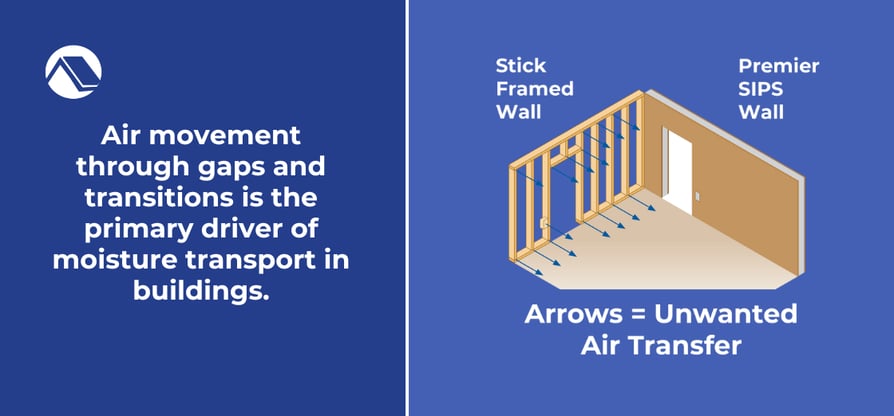
High-performing buildings manage moisture by maintaining continuous control layers across the entire envelope. Air, water, and thermal control must work together—not independently.
Achieving that continuity consistently is difficult when envelopes are assembled layer by layer in the field. Each additional layer, trade, and transition introduces variability and risk.
Structural Insulated Panels (SIPs) support this approach by reducing the number of layers and interfaces that must be coordinated during construction. With fewer transitions to manage, it becomes easier to establish continuity and maintain it throughout construction.
By reducing layers and interfaces, SIPs shift moisture control from a field-assembled process to a system designed for continuity from the start. This doesn’t eliminate the need for proper detailing—it reduces the number of opportunities for detailing to fail.
Moisture control strategies vary by project.
In systems-based construction, joint and seam treatment isn’t a secondary task—it’s a critical part of maintaining envelope continuity.
Sealants at Transitions
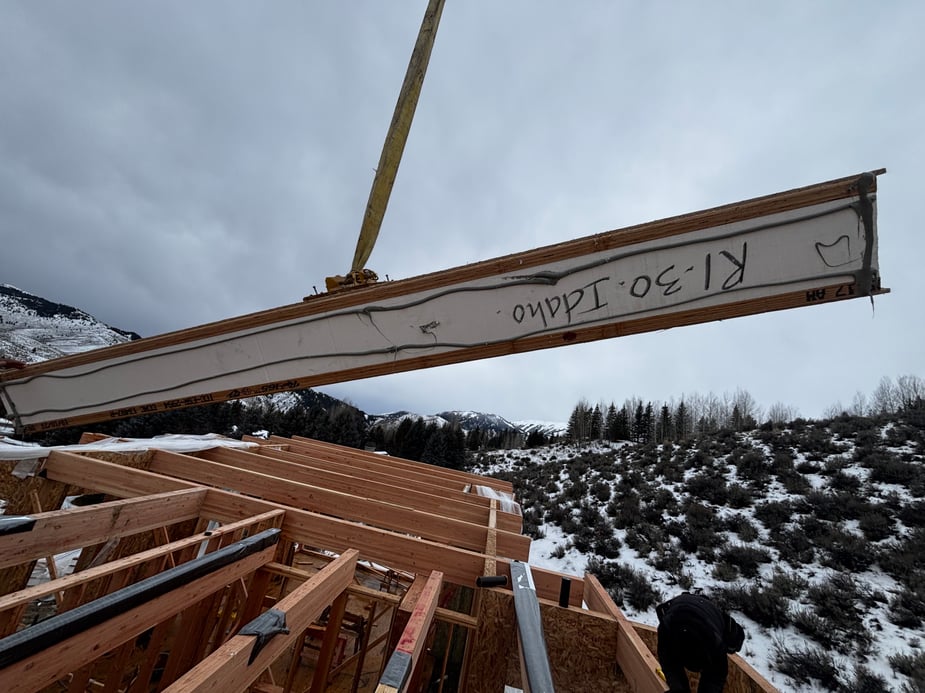
Sealants are used at joints, penetrations, and transitions where SIPs are connected to each other, where they meet foundations, roofs, windows, and other assemblies. When applied correctly, they help maintain continuous air and moisture control at the most vulnerable points in the envelope.
As part of a coordinated system, sealants help:
Limit air movement that carries moisture
Protect high-risk transitions
Support long-term envelope durability
⇒ Watch how sealants are applied at SIP joints and transitions in the field.
Typical SIP sealant application detail illustrating continuous sealant placement at wall and roof panel joints:
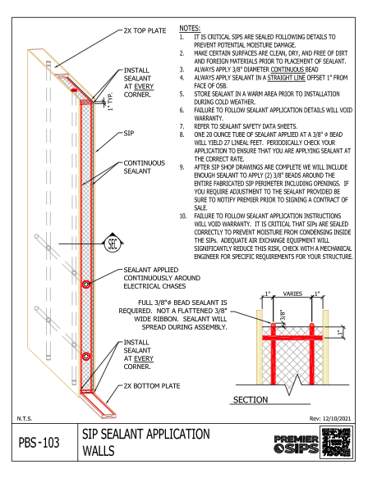
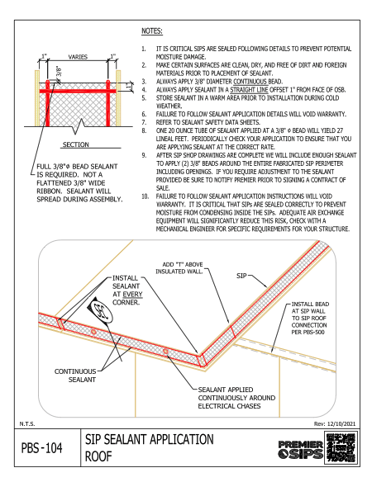
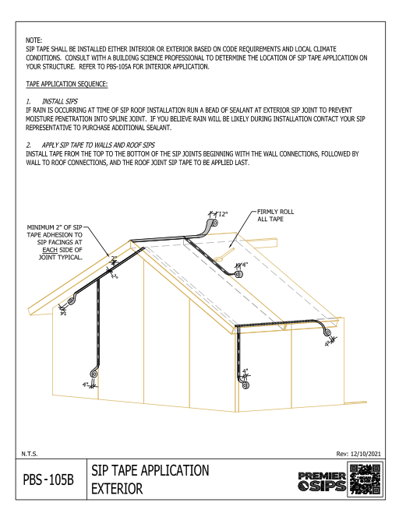
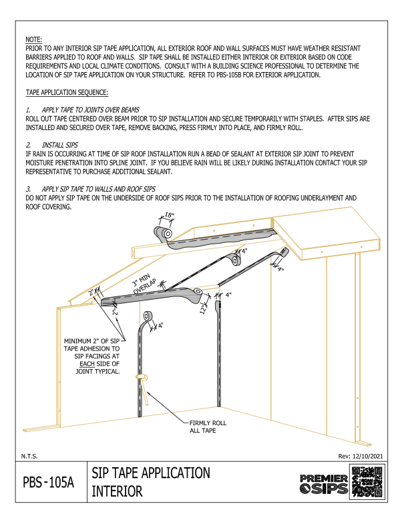
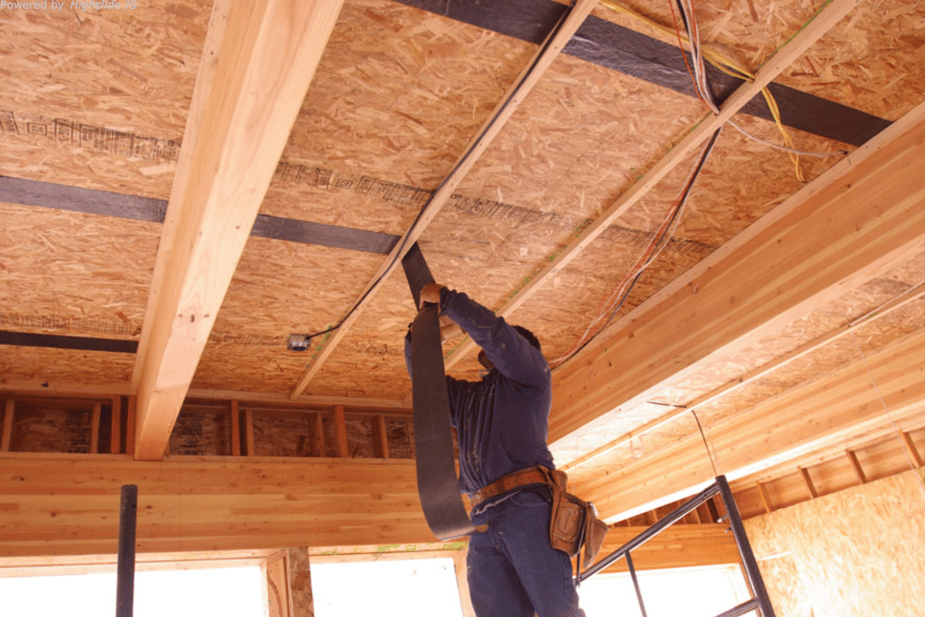 SIP tape is designed to seal panel seams and reinforce continuity across the envelope. Used alongside sealants, it helps ensure air and moisture control layers remain connected at panel joints.
When installed properly, SIP tape:
⇒ Watch how SIP tape is installed to support a continuous, moisture-resistant envelope.
⇒ Typical SIP tape application detail illustrating continuous seam sealing at interior and exterior SIP panel joints:
Airtight construction is a critical part of moisture control—but it does not work in isolation.
When envelopes are airtight, ventilation must be intentional and controlled. Relying on accidental air leakage to manage moisture introduces unpredictability and long-term risk.
High-performance buildings pair airtight envelope systems with properly designed mechanical ventilation strategies. This allows moisture to be managed deliberately rather than incidentally.
SIP construction supports this balance by making airtightness more predictable, which allows ventilation systems to be sized, specified, and operated as intended.
For a deeper look at how airtightness and ventilation, read:
Moisture is a constant in construction. Climate affects how it behaves—but not the need to control it.
Buildings that perform well over time aren’t defined by avoiding moisture altogether. They’re defined by envelope systems designed to manage it predictably, consistently, and across every transition, while supporting intentional ventilation strategies.
That’s what it means to build better—and why systems-based approaches like SIPs offer a more reliable path to moisture management than layered construction.
How does moisture typically enter buildings?
Moisture most often enters buildings through air movement at joints, seams, and transitions where envelope continuity breaks down.
Why is air leakage such a significant moisture risk?
Air carries moisture. When air moves through gaps in the building envelope, it transports moisture into assemblies where condensation and long-term damage can occur.
How do SIPs help manage moisture differently than layered construction?
SIPs reduce the number of envelope layers and interfaces, making it easier to maintain continuous air and moisture control across the building.
Do SIPs eliminate moisture issues entirely?
No building system eliminates moisture risk. SIPs reduce risk by improving predictability and reducing opportunities for air and moisture intrusion.
How does airtight construction affect ventilation requirements?
Airtight envelopes require intentional mechanical ventilation so moisture can be managed deliberately rather than through uncontrolled air leakage.
When should moisture management strategies be addressed in a project?
Moisture management should be considered early in design, before envelope components are selected, to ensure continuity and coordination across the system.

Premier SIPS deliver a high-performance building envelope that outperforms traditional framing in efficiency, strength, and long-term durability. If you're evaluating SIPs, planning an upcoming project, or ready for pricing, now is the time to talk with our team about the right next step.
