



.svg)


Apex Track Side Car Condo, AZ
Award winner
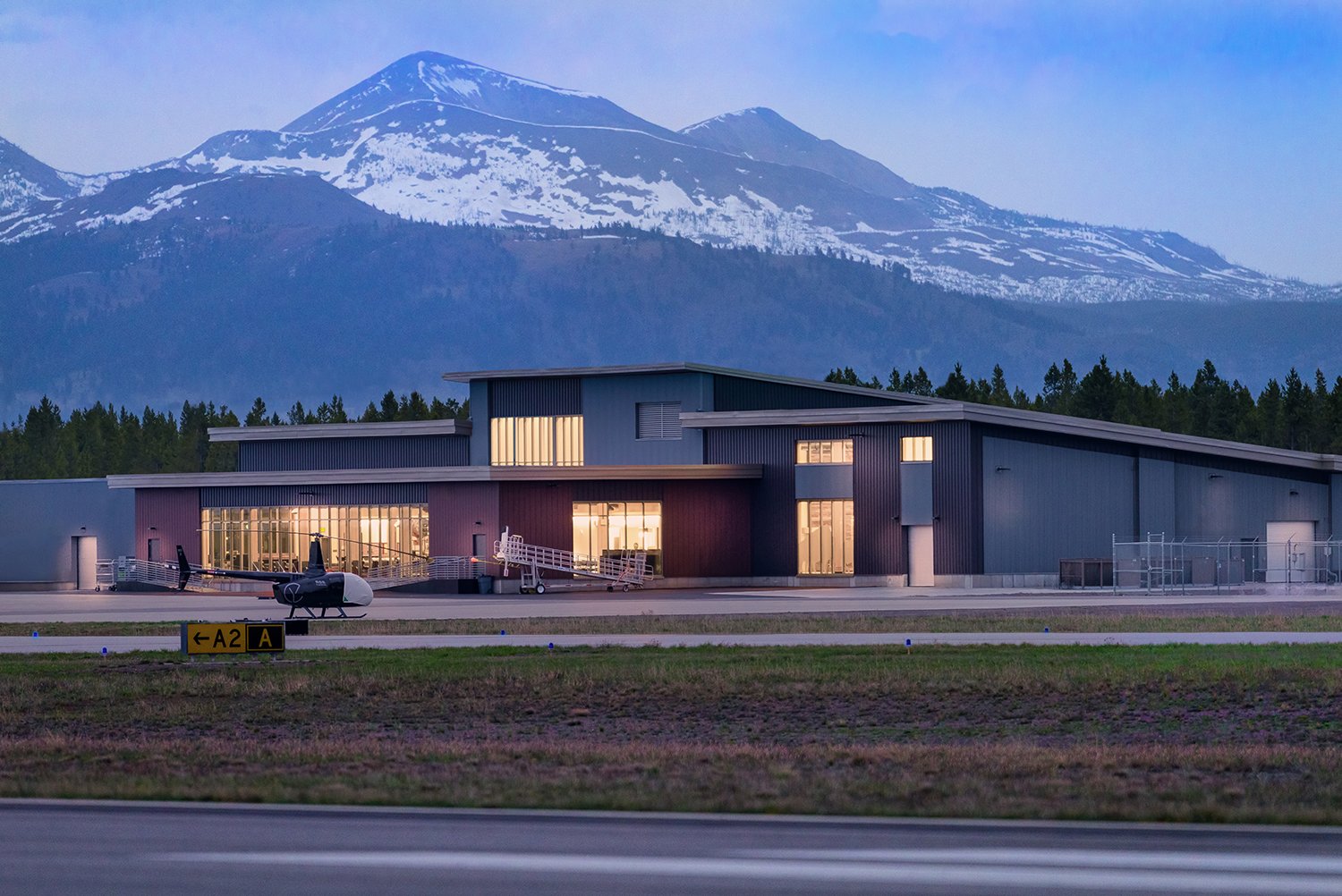
Yellowstone Airport | High-Performance SIP Aviation Facility in Montana
Project Type Commercial | Community Use
Year Completed 2025
Project Size 31900 sq ft
SIPS Used Roof: 12" GPS
Environmental Certifications LEED/USGBC
Awards BEA Commercial Over 10K Sq. Ft. Winner
Architect AE Design
Structural Engineer Cushing Terrell
Contractor Martel Construction
Project Overview
West Yellowstone Airport (WYS)
High-Performance SIP Construction for Aviation Infrastructure, Type III-B Commercial Airport Terminal, receiving LEED® Silver certification in July 2025
The West Yellowstone Airport (WYS) project supports aviation operations serving the greater West Yellowstone region, a location defined by extreme seasonal weather, cold temperatures, and high operational demands. As a critical piece of regional transportation infrastructure, the facility required a durable, energy-efficient building envelope capable of maintaining reliable interior conditions while minimizing long-term operational costs.
Structural Insulated Panels (SIPs) were incorporated as a primary construction strategy to support efficiency, durability, and predictable performance in a challenging mountain environment.
Design and Sustainability
Airport facilities must balance large open interior volumes with conditioned spaces that support staff, travelers, and aviation operations. In West Yellowstone’s cold-climate conditions, controlling heat loss, air infiltration, and thermal bridging is essential to maintaining functionality and comfort.
The design emphasizes a robust, continuous building envelope that reduces energy demand while supporting long service life. SIP construction plays a central role in this strategy by delivering integrated structure, insulation, and air sealing in a single system.
Why SIPs?
Structural Insulated Panels (SIPs) were selected for their ability to deliver consistent thermal performance, construction efficiency, and durability—key priorities for aviation and institutional buildings.
For airport facilities, SIPs offer a practical solution that supports large-scale construction while reducing envelope complexity. Their prefabricated nature improves quality control, accelerates enclosure, and helps ensure predictable performance across walls and roof assemblies.
Benefits of SIPs
The use of SIPs provided several important advantages for the West Yellowstone Airport project:
-
Energy Efficiency:
Continuous insulation and reduced air leakage help limit heating demand in a cold-climate environment. -
Durability:
SIP construction creates a solid, resilient envelope designed to withstand harsh weather and long-term use. -
Construction Efficiency:
Panelized SIP assemblies streamline installation and reduce onsite construction time. -
Operational Reliability:
Improved envelope performance supports stable interior conditions critical for airport operations.
Construction and Innovation
SIP construction enabled efficient enclosure of the airport facility while maintaining envelope continuity across large wall and roof areas. The system’s prefabrication helped reduce onsite variability and improve overall build quality—important advantages for public and aviation infrastructure projects.
Performance & Sustainability Features
-
LEED® Silver Certified – BD+C: New Construction (v4)
Certified July 2025
Energy modeling based on ASHRAE 90.1-2010 (Climate Zone 6)
Certification by Kath Williams & Associates, Bozeman, Montana -
High-performance SIP roof system:
12" GPS SIP roof assembly serving as a foundational strategy for thermal continuity, durability, and structural performance in a severe winter climate -
Modeled energy performance (LEED energy simulation):
-
Projected Energy Use Intensity (EUI): 44.4 kBtu/ft²·yr
-
Heating energy: approximately 16.2 kBtu/ft²·yr
-
Cooling energy: approximately 3.7 kBtu/ft²·yr
-
Modeled reductions compared to LEED baseline:
-
27% reduction in energy cost
-
23% reduction in source energy
-
28% reduction in greenhouse gas emissions
-
-
-
Airtightness strategy:
Envelope airtightness addressed through high-performance assemblies and detailed construction modeled in LEED energy simulation
(Blower door testing not required for this project type under LEED) -
High-efficiency mechanical systems:
-
DX VAV HVAC system with hot-water reheat
-
High-efficiency condensing boilers
-
Demand-controlled ventilation
-
Systems designed to maintain occupant comfort and reduce peak loads in a cold-climate, high-variability airport environment
-
-
SolarWall® solar thermal ventilation preheating system:
-
Uses solar thermal energy to preheat outdoor ventilation air
-
Reduces heating energy demand during cold weather
-
Contributes to lower greenhouse gas emissions without roof-mounted photovoltaic panels
-
-
Energy-efficient lighting systems:
-
High-efficiency interior and exterior lighting
-
Occupancy sensors and daylight-responsive controls
-
-
High-performance envelope strategies:
-
SIP roof system paired with complementary envelope materials
-
Assemblies designed to reduce heat loss, improve daylighting, and support long-term durability in extreme winter conditions
-
-
Sustainable construction and materials:
-
Full LEED credit achieved for construction and demolition waste management
-
Low-emitting materials supporting indoor air quality
-
Reuse of historic materials from the original terminal, including stone integrated into the new interior
-
-
Site and community considerations:
-
Heat-island and light-pollution reduction strategies
-
Integrative design process
-
Planning for future expansion to extend lifecycle value
-
Challenges and Solutions
Airport buildings in cold, remote regions must address extreme temperatures, wind exposure, and long operating lifespans. SIPs addressed these challenges by delivering a high-performance envelope that limits heat loss, improves airtightness, and supports reliable year-round operation with reduced maintenance demands.
Key Features
-
Aviation facility serving West Yellowstone Airport
-
Structural Insulated Panel (SIP) wall and roof construction
-
High-performance building envelope for cold-climate conditions
-
Durable, low-maintenance construction approach
-
Designed to support long-term airport operations
Ready to Build Beyond Conventional Framing?
Premier SIPS deliver a high-performance building envelope that outperforms traditional framing in efficiency, strength, and long-term durability. If you're evaluating SIPs, planning an upcoming project, or ready for pricing, now is the time to talk with our team about the right next step.
