Originally Published: June 25, 2026
| Last Updated: July 7, 2026
Share article
Every week of the construction schedule matters. Elevated loan rates mean carrying costs compound fast. Lumber pricing is volatile. Labor is tight. The projects that are protecting margins right now are doing it through schedule discipline and cost certainty.
Parallel construction is how the best development teams are achieving both. And Structural Insulated Panels (SIPs) is how they are doing it without specialty procurement, custom delivery, or a different contractor.
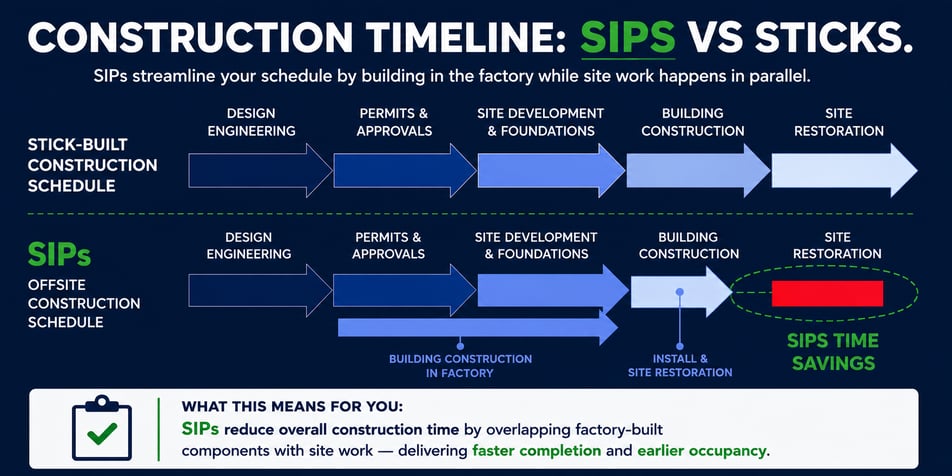
Parallel construction means two things happen at once: your panels are being built in a factory while your crew pours the foundation and preps the site. By the time the site is ready, the building envelope arrives sequenced and installation-ready. No waiting between phases.
Definition
Parallel construction in building is a project delivery method where factory fabrication and on-site foundation and site work run simultaneously on two independent tracks, converging at panel installation. Unlike conventional construction, where each phase waits for the previous one to finish, parallel construction compresses the critical path by eliminating sequential delays between fabrication and site readiness. With Structural Insulated Panels, this parallel workflow is built into the system by design: panels are precision-fabricated in a factory while the foundation is poured, arriving on site sequenced and installation-ready.
With SIPs, this parallel workflow is built into the system by design. Panels are precision-fabricated in a factory while foundation work proceeds on site, arriving sequenced and ready to install.
Premier SIPS has been delivering parallel construction outcomes on residential, commercial, and multifamily projects for decades. Not as a specialty product or a custom procurement. As a standard panelized enclosure system available to any project team willing to specify it at the right phase of design.
The question for developers is not whether parallel construction is a good idea — the data, and every project team that has used it, has answered that. The question is whether your next project is designed to capture it, or designed to leave it on the table.
*Figures based on RSMeans Time and Motion Study comparing identical 2,500 SF homes. Results represent documented study outcomes. Actual performance varies by project size, design, and site conditions.
In a conventional construction sequence, the schedule is linear: design, permit, site development, framing, trades, finish. Each phase waits for the one before it. Weather delays, labor shortages, and inspection queues compound across the entire timeline.
Parallel construction breaks that sequence into two simultaneous tracks. While the site is being prepared and the foundation poured, the building panels are being fabricated in a controlled factory environment. The two tracks converge at installation. There is no waiting.
This is not a new concept. It is the core logic behind every offsite fabrication method. What is new is the industry's growing recognition that this schedule compression has to be engineered into the design from the start, not bolted on as a value-engineering exercise after permit.
SIPs designed into a project from the start deliver the full benefits of parallel construction by default — a faster schedule, lower carrying costs, and a building that outperforms conventional construction in energy efficiency and durability for the life of the asset.
That difference is measured in dollars. Construction loan rates remain elevated. Every week of schedule compression is a week of interest carry eliminated. Every week a project reaches substantial completion sooner is a week closer to the revenue it was underwritten on.
For builders and contractors, parallel construction practically changes the workflow. While the factory is running panel production, your crew is active on site — foundation, utilities, site prep. There is no downtime waiting on materials. When panels arrive, they are sequenced and ready, and installation moves fast. Fewer trades to coordinate. Less material staging on site. A cleaner, more predictable schedule from start to finish.
Builders who spec SIPs consistently find they can compress their own schedules enough to take on more projects without adding crew.
For architects, specifying SIPs at schematic design is where you add direct financial value for your clients — locking in the parallel workflow before it can be designed out. That single decision consistently separates projects that capture the full schedule advantage from those that get only part of it.
Parallel Planning
Plan for This: The 10 to 12 Week Lead Time
SIPs carry a 10 to 12 week lead time from order to delivery: three to five weeks for shop drawings and engineering after deposit, then approximately six weeks for manufacturing and delivery after drawing approval. Lead time varies by season, project complexity, and engineering review — use 10 to 12 weeks as your planning benchmark and confirm timing for your specific project with your Premier SIPS territory manager.
Planned at project start, this window costs nothing — fabrication runs during permit review while site work proceeds simultaneously.
The builders and developers who capture the full parallel construction advantage are the ones who build this lead time into their project schedules from day one.
The RSMeans Time and Motion Study, the gold standard in construction labor research, compared two identical 2,500 SF homes, one stick-framed and one built with SIPs. The findings were unambiguous:
130 labor hours saved per home
55% faster installation
Fewer crew members required
Multiple trade steps replaced by a single installation sequence
A separate comparison study found builders saved an average of 9 days per home on framing and inspection time alone, translating to $3,440 per home in reduced labor costs, before accounting for interest savings on shortened construction loans.
The mechanism is straightforward. SIPs consolidate four separate trade sequences, framing, sheathing, insulation, and air sealing, into one installation with one crew. There is no waiting for insulation contractors after framing is done. There is no coordination lag between sheathing and air sealing. The trades that follow, MEP rough-in, drywall, finish, start earlier because the building is enclosed earlier.
*Labor savings figures are based on documented comparison studies and represent example outcomes. Actual savings vary by project size, location, labor market, and construction type. Contact your Premier SIPS territory manager for project-specific guidance.
SIPs vs. Conventional Framing: What the Schedule and Cost Difference Actually Looks Like
The RSMeans data quantifies the labor gap. The project record below shows what that gap translates to in real project outcomes. In every documented comparison, the SIP schedule advantage is not incremental. It is structural, because the parallel construction model eliminates entire sequential phases rather than compressing them.
Swipe to see full table on mobile
SIPs vs. Conventional Framing: Schedule and Cost
Phase
Conventional
SIP Construction
Framing
Sequential, after foundation complete
Runs in parallel with site work during permit and foundation
Insulation
Separate trade, after framing
Factory-installed, arrives complete with panels
Air sealing
Separate scope, variable field quality
Factory-controlled, consistent across every panel
Sheathing
Separate material and labor step
Integral to panel, no separate step
Dry-in timeline
Baseline
55% faster per RSMeans
Labor hours
Baseline
130 hours saved per RSMeans
Material cost
Subject to lumber market at framing
Fixed at order, locked against market movement
Jobsite waste
Baseline
30 to 50% less than conventional framing
Blower door
Variable by crew quality
1.0 ACH50 or better, consistently
Proof Across Every Building Type and Scale
The following projects represent a cross-section of building types, owner profiles, and project scales. From a remote Montana fly fishing lodge to a 350-home San Diego subdivision to affordable multifamily housing in Phoenix. In every case, the schedule advantage was real, measurable, and tied directly to business outcomes for the owner.
Lodging / Hospitality | Montana
Commercial / Hospitality | Montana
Madison Valley Ranch
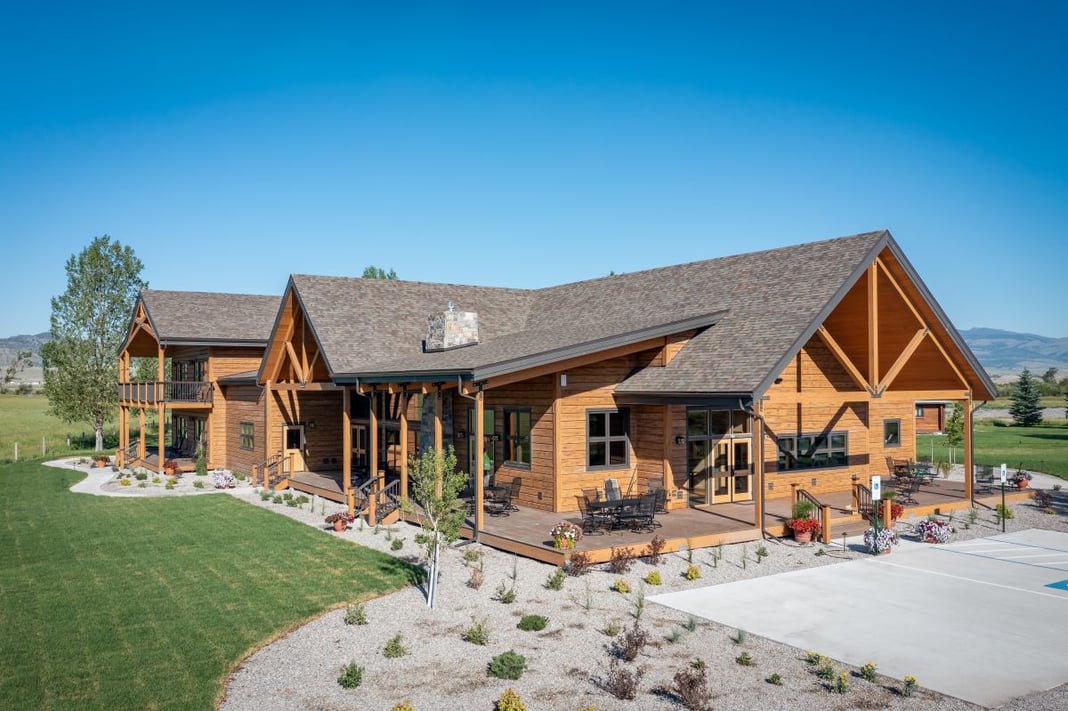
8,725 SF Commercial Lodge | Architect: Cushing Terrell | Contractor: Martel Construction | Completed 2021
8.5 moDemo to Complete
14 moConventional
5.5 moSchedule Saved
30%Faster Erection
The owner could not afford to lose a fly fishing season. A 14-month conventional build would have done exactly that. By fast-tracking with SIPs, the project delivered in 8.5 months, saving 5.5 months of schedule and protecting a full revenue season.
When lumber prices spiked mid-project, the factory purchase order had already locked material costs, shielding the project from escalation charges hitting every conventional build in the market at the same time.
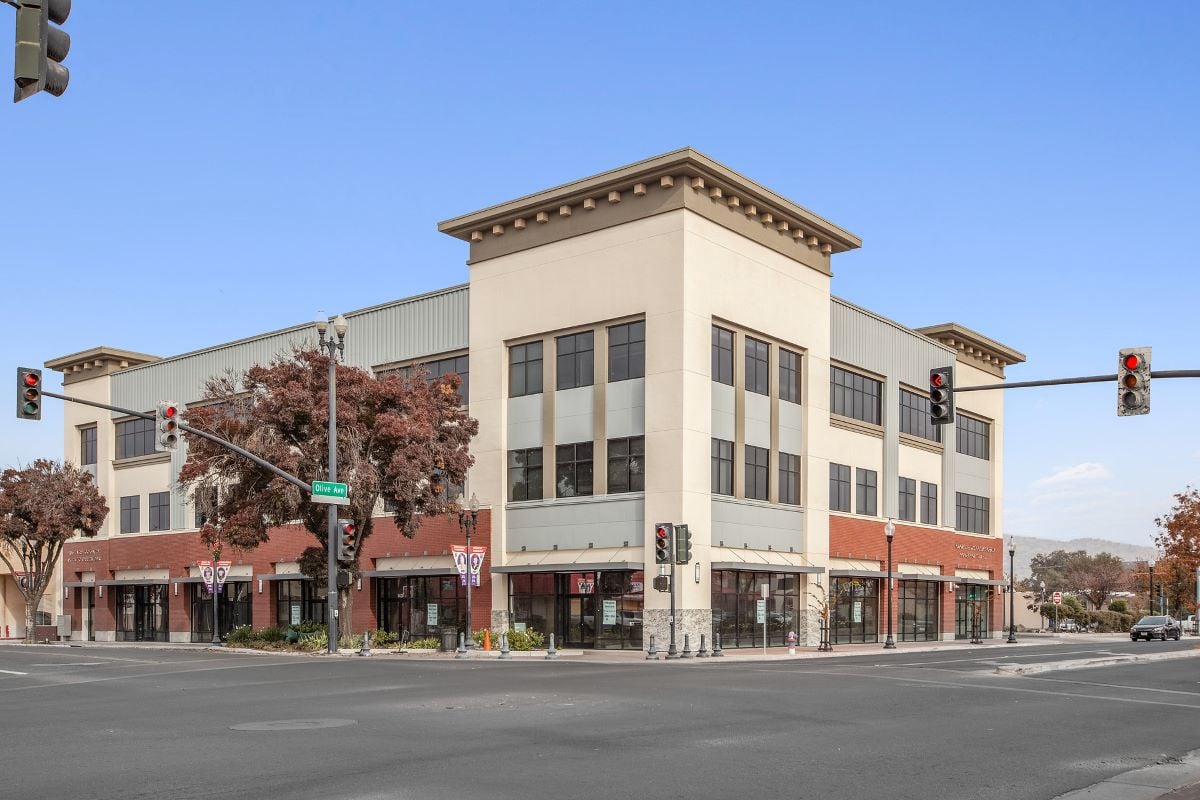
SIPs were selected for this 3-story mixed-use office and retail building specifically for the aggressive construction schedule and high-performance requirements. The result was 5 to 6 weeks of schedule savings versus conventional framing, documented by the project superintendent.
Beyond schedule, SIPs replaced a moment frame shear wall system, eliminated interior support columns, and delivered larger ground-floor storefront openings. Better leasability was baked directly into the structural decision.
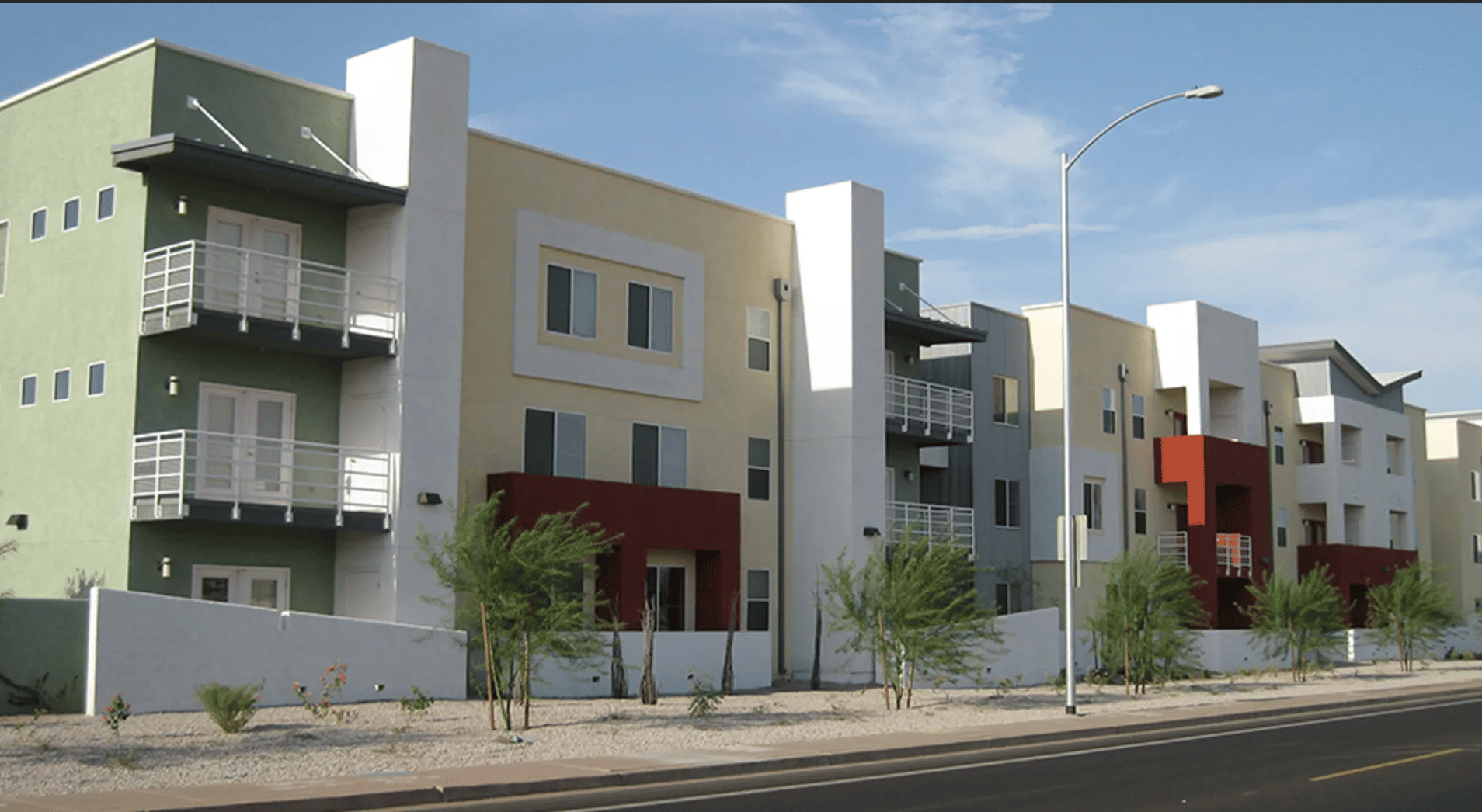
2 Buildings, 3 Stories, 56 Units | Developer: Tanner Construction | Contractor: Tofel Construction
<1 moTo Frame Both Buildings
23,500 SFof SIP Walls
56 units44 Two-Bed + 12 Three-Bed
On a tax credit deal where construction loan carry is a direct drag on feasibility, framing speed is not a nice-to-have. It is a financial variable. SIPs framed 23,500 SF of walls across two three-story buildings in under one month, cutting framing time and labor costs significantly versus conventional framing.
The clearest proof of the financial outcome: the developer committed to specifying SIPs on all subsequent multifamily projects. That is not a testimonial. It is a capital allocation decision made by someone who ran the numbers twice.
The project earned the Arizona Department of Housing Exemplary Urban Multifamily Project Award and a SIPA Building Excellence Award Multifamily Honorable Mention.
Speed Is the Entry Point. Performance Is the Payoff.
Schedule compression gets projects financed, keeps owners happy, and reduces carrying costs. But the buildings that result from SIP specification do not just go up faster. They perform better over their entire service life, delivering lower operating energy expenses, improved net operating income (NOI), and higher stabilized asset value. Here is what SIPs do across the full developer pro forma:
The Complete Developer Pro Forma: What SIPs Affect
Pro Forma Line Item
What SIPs Do to It
Construction interest carry
Reduced by faster enclosure and schedule compression
Framing and insulation labor
Reduced by factory fabrication; fewer sequential trades on site
Material cost exposure
Fixed at order; eliminates lumber price volatility through project completion
HVAC equipment and installation
Reduced by lower mechanical load on a tight, high-performance envelope
Operating energy expenses
Reduced significantly versus conventional construction over the holding period
Net operating income (NOI)
Improved by lower energy and maintenance costs; drives higher stabilized value
Stabilized asset valuation
Higher at any cap rate due to improved NOI
Insurance premiums
Potentially reduced; SIP structural performance cited by owners as basis for reductions
Federal tax credits
45L and 179D potentially available on qualifying residential and commercial projects — verify current eligibility with a tax professional*
Tenant revenue and absorption
Supported by demonstrable energy cost advantage in competitive leasing markets
Jobsite waste and site cleanup
30 to 50 percent less waste versus conventional framing
*At the time of publication, qualifying residential and commercial projects may still be eligible for federal energy-efficiency incentives, including the 45L New Energy Efficient Home Credit and the 179D Energy Efficient Commercial Buildings Deduction. However, these programs are currently scheduled to expire for many projects after June 30, 2026. Eligibility requirements, deadlines, and program availability are subject to change. Builders, developers, and project owners should consult a qualified tax professional to determine current eligibility and incentive availability.
The construction advantages above are where the story starts. They are not where it ends.
The building that goes up faster and costs less to build also costs significantly less to operate. SIP envelopes consistently deliver heating and cooling loads that are a fraction of conventionally framed buildings of the same size. For a multifamily developer, that translates directly to lower tenant utility bills, faster unit turns, reduced maintenance, and an NOI advantage that compounds over the entire holding period.
SIPs also deliver meaningful advantages in sound attenuation, fire resistance, and pest resistance — the operational factors that drive tenant satisfaction, reduce maintenance costs, and protect asset value over the long term. For multifamily developers, these are not secondary considerations. They are the performance characteristics that separate buildings that hold value from buildings that require ongoing remediation.
The full operational and long-term ownership case for SIPs in multifamily construction is covered in detail in the article below.
Every project in this article had one variable in common: the decision to use SIPs was made before installation began. The parallel construction advantage requires design decisions that happen upstream:
Panel sizing and configuration decisions that allow factory and site to run on independent tracks
Shop drawing coordination early enough that fabrication begins during permit review
Structural decisions, shear wall systems, column layout, roof assembly, made with SIPs in mind from the start
Mechanical scope that accounts for a lower heating and cooling load, an airtight envelope, and ERV or HRV ventilation requirements
Construction schedule that includes the 10 to 12 week SIP lead time from order to delivery
When those decisions happen at schematic design, the factory starts fabricating while the permit is processing and the foundation is being poured. When they happen after design development, some of that overlap is lost. When they happen after permit as a value-engineering move, the savings are real but partial.
Specify Early. Deliver More.
The projects documented here span residential, commercial, affordable multifamily, and hospitality construction. They range from under 9,000 square feet to over 47,000. They saved days, weeks, and months of schedule, and in every case that schedule savings translated directly into financial value for the owner.
The common thread is not luck or market conditions. It is design intent. Developers who engage Premier SIPs at schematic design give their projects a compressed schedule, a superior enclosure, and a building that will outperform conventional construction for the life of the asset.
The question is not whether your next project could benefit from parallel construction in building. It is whether you are going to design for it.
The earlier Premier SIPS is part of your project conversation, the more your schedule, budget, and building performance benefit. Our advisors work alongside your team at schematic design to make sure every advantage SIPs offer shows up where it matters most — on your pro forma and in the finished building.
What is parallel construction in building, and how does it save time?
Parallel construction means two things happen at once: panels are built in a factory while your crew pours the foundation and preps the site. By the time the site is ready, the building envelope arrives sequenced and installation-ready — eliminating weeks of waiting time between phases. With SIPs, this parallel workflow is built into the system by design.
How much faster do SIPs install compared to traditional stick framing?
According to the RSMeans Time and Motion Study, the construction industry's gold standard for labor research, SIPs install 55 percent faster than conventional stick framing, saving 130 labor hours on a typical 2,500 SF home. A separate comparison study found builders saved an average of 9 days per home on framing and inspection time, translating to $3,440 per home in reduced labor costs before accounting for interest savings on shortened construction loans.
How do SIPs affect construction loan interest costs?
Because SIPs compress the schedule from construction start to dry-in and occupancy, the duration of construction loan exposure is reduced. On the Madison Valley Ranch project in Montana, SIPs helped deliver an 8.5-month build on a project that would normally take 14 months, protecting a full revenue season for the owner. On the Grandfamilies Place affordable multifamily project in Phoenix, interest savings were significant enough that the developer committed to SIPs on all subsequent multifamily projects.
What is the financial impact of SIPs on net operating income?
SIP buildings deliver substantially lower heating and cooling loads than conventionally framed buildings of the same size. That reduced load means smaller HVAC equipment and lower installation costs upfront, and meaningfully lower energy consumption over the operating life of the building. On income-producing properties, reduced operating expenses increase NOI, which increases asset valuation at any given cap rate. Crown Hills homeowners in San Diego documented energy costs of $53.56 per month versus $125 to $135 for comparable stick-built homes, a gap that exceeded $18,000 per home over 10 years.
Can SIPs be used on affordable housing and tax credit projects?
Yes, and the economics are particularly compelling. On tax credit deals where construction loan carry is a direct drag on deal feasibility, framing speed is a financial variable, not just a scheduling convenience. The Grandfamilies Place project in Phoenix, a 56-unit, 2-building, 3-story affordable housing complex financed through Low Income Tax Credits, framed 23,500 sq ft of walls across the entire complex in under one month. The project earned the Arizona Department of Housing Exemplary Urban Multifamily Project Award.
Do SIPs work on large commercial and multistory projects, not just residential?
Yes. Some of the strongest schedule savings documented in Premier SIPs projects come from commercial applications. The Cornerstone Retail building in Porterville, CA, a 47,116 SF, 3-story mixed-use development, saved 5 to 6 weeks compared to conventional framing per the project superintendent. SIPs also replaced a moment frame shear wall system on that project, reducing interior columns and creating better leasing flexibility. Premier SIPs has been specified on office buildings, lodges, data centers, wineries, community centers, and large residential subdivisions, demonstrating that the schedule and structural advantages apply across every commercial building type.
When should a developer specify SIPs to capture the full parallel construction benefit?
At schematic design. The parallel construction advantage requires structural and panel configuration decisions that happen upstream, including shear wall systems, column layout, roof assembly, and mechanical coordination. When SIPs are specified at schematic design, factory fabrication can begin during permit review while site work proceeds simultaneously. Late specification still delivers real savings, but captures only a portion of the available schedule compression. Projects that specify SIPs at schematic design consistently outperform late-specification projects in schedule, cost, and building performance.
How do SIPs help manage lumber price volatility and material cost risk?
Factory-fabricated systems with pre-purchased materials offer a hedge that stick framing cannot. On the Madison Valley Ranch project, lumber prices spiked significantly mid-construction, but the factory purchase order had already locked pricing at project start, shielding the project from escalation charges hitting every conventional build in the market at the same time. A fixed building envelope cost is a meaningfully different risk profile for lenders and equity partners than a conventional framing bid subject to lumber market conditions.
What is the long-term energy performance of SIP buildings?
SIPs consistently outperform stick-framed buildings on energy efficiency over their service life. In a monitoring study of the Crown Hills subdivision in San Diego, using San Diego Gas and Electric data, SIP homes averaged $53.56 per month in energy costs, compared with $125 to $135 for comparable stick-built homes. As energy prices escalated, the gap widened: Crown Hills homes averaged approximately $160 per month while nearby stick-built homes averaged nearly $400 per month. Cumulative savings over 10 years exceeded $18,000 per home. Premier SIPs buildings consistently achieve 1.0 ACH50 or better in blower-door testing.
Ready to Build Beyond Conventional Framing?
Premier SIPS deliver a high-performance building envelope that outperforms traditional framing in efficiency, strength, and long-term durability. If you're evaluating SIPs, planning an upcoming project, or ready for pricing, now is the time to talk with our team about the right next step.




.svg)