



.svg)


Modern Issaquah Neighborhood, WA
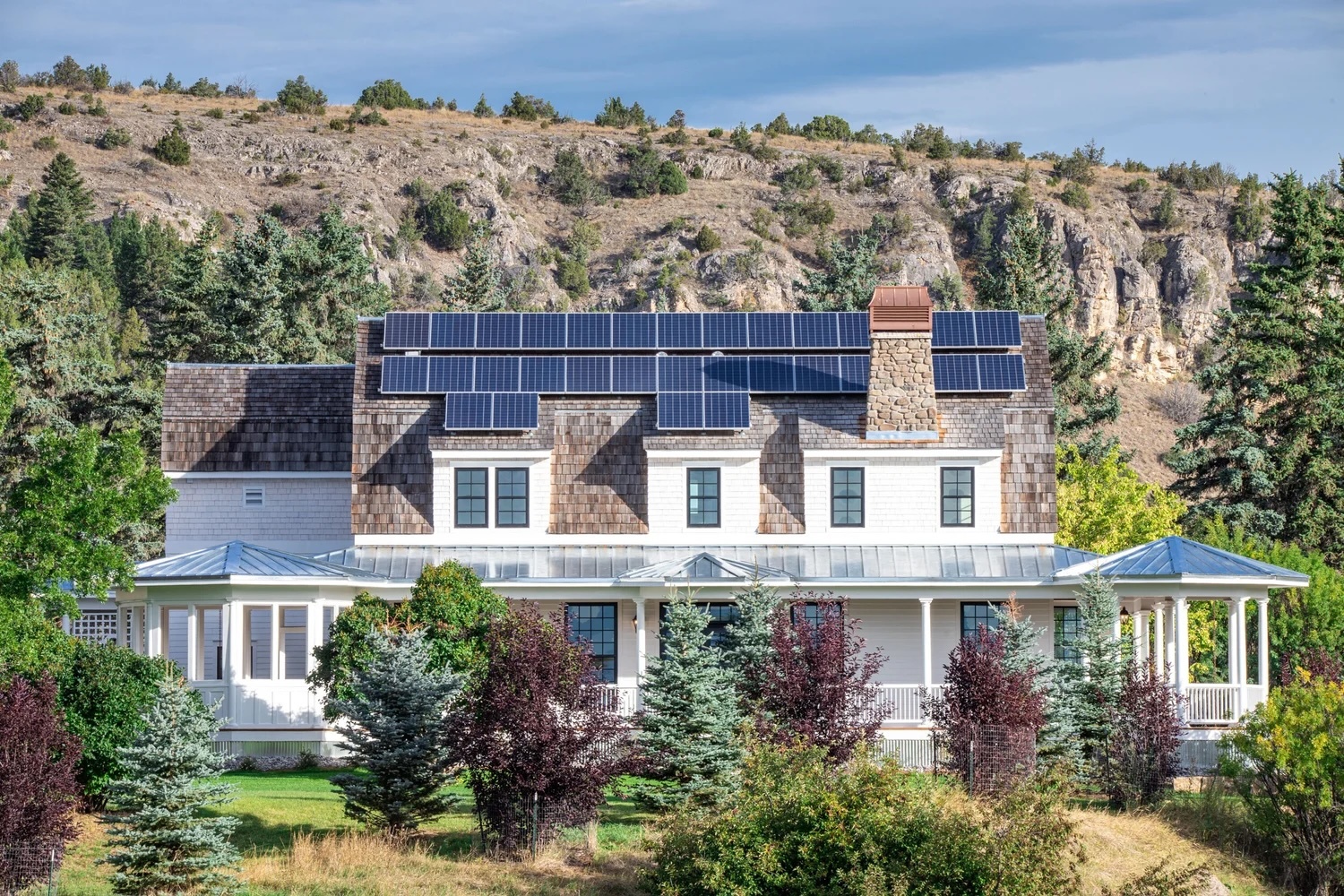
The Farmhouse | Net-Zero SIP Residence in Belgrade, Montana
Montana
Project Type Residential | Single Family > 3000 sf
Year Completed 2019
Project Size 4200 sq ft
SIPS Used Walls
Architect High Plains Architects
Project Overview
Information and photos provided by High Plains Architects. Visit their website for more project details and photos.
The Farmhouse
A Net-Zero SIP Home Built on a Reclaimed Foundation.
In the foothills of the Bridger Mountains outside Belgrade, Montana, a dated 1970s shed-style home had good bones in the wrong style. Rather than start over, High Plains Architects and owner SxS Group kept the original foundation and built an entirely new, two-story home on top of it, trading the shed roof for a gambrel form built for Montana's seasons.
The new 4,200-square-foot, 4-bedroom, 3-full-bath, 2-half-bath residence is framed with Structural Insulated Panels, SIPs, and reaches net-zero electric performance on an 8.5 kW roof-mounted solar array, all while delivering the herringbone floors, coffered ceilings, and hand-finished carpentry of a traditional farmhouse.
Why SIPs?
Building on an existing foundation only pays off if the framing above it goes up fast and performs well for decades. SIPs delivered both. A panelized wall system meant the crew wasn't cutting, insulating, and air-sealing stud by stud on site, which cut construction waste and shortened the schedule, compounding the savings already gained by reusing the foundation instead of starting from scratch.
The performance case mattered just as much as the schedule case. Reaching net-zero electric on a modest 8.5 kW solar array, small by custom-home standards, requires a building that isn't leaking energy through its walls. A continuous, factory-built SIP envelope gave the home the airtightness and consistent R-value needed to make that math work, even under a complex gambrel roofline with multiple dormers.
Benefits of SIPs
Waste reduction, twice over: Reusing the original foundation cut demolition and material waste. Factory-built SIPs cut job-site framing waste on top of that, pairing two waste-reduction strategies in one project.
Net-zero on a right-sized solar array: A tighter, better-insulated envelope means the home doesn't need an oversized solar system to hit net-zero electric. SIPs did the work that would otherwise have to be made up in panel count.
Faster enclosure, shorter schedule: Panelized walls close in faster than stick framing, which matters on a project already saving time by building on an existing foundation.
Consistent performance under a complex roofline: The gambrel form and dormers add architectural interest without sacrificing the continuous insulation the SIP walls provide.
Performance & Sustainability Features
-
Net-zero (electric) performance
-
8.5 kW roof-mounted solar array
-
Heat recovery ventilator
-
Built on a reclaimed 1970s foundation, reducing construction waste and schedule
-
Gambrel roof form with dormers, oriented to maximize solar performance
-
Super-insulated SIP wall envelope suited to Montana's seasonal extremes
Construction and Innovation
The decision to keep the existing foundation instead of demolishing it entirely shaped everything that followed. It meant the new structure had to be designed around a fixed footprint, which made envelope performance and construction speed even more important; there was no room to make up for a slow or leaky build elsewhere in the schedule. SIP walls gave the team a way to build precisely, quickly, and efficiently on top of that constraint, without compromising on the traditional farmhouse detailing the owners wanted inside.
Key Features
- Net-zero (electric), single-family residence in Belgrade, Montana
- 4,200 sq ft | 4 bed, 3 full bath, 2 half bath
- Structural Insulated Panel (SIP) wall construction
- Built on a reclaimed 1970s foundation to cut waste, cost, and schedule
- 8.5 kW roof-mounted solar array
- Heat recovery ventilator
- Gambrel roof design suited to Montana's climate
Ready to Build Beyond Conventional Framing?
Premier SIPS deliver a high-performance building envelope that outperforms traditional framing in efficiency, strength, and long-term durability. If you're evaluating SIPs, planning an upcoming project, or ready for pricing, now is the time to talk with our team about the right next step.
